
Planning a DIY kitchen remodel can feel overwhelming, but having a solid estimate template makes it manageable. You’ll need to evaluate your current layout, identify problem areas, and gather your tools. With a clear structure in place, you can create a detailed itemized list to keep your project on track. But there’s more to take into account, especially when it comes to costs. Let’s explore how to guarantee your budget covers everything you need.
Key Takeaways
- Start by evaluating your kitchen layout and daily needs to identify essential changes and improvements needed for the remodel.
- Create a detailed itemized list of materials and labor costs, ensuring to include quantities and specific requirements for each aspect of the project.
- Research local suppliers and online resources to compare prices for cabinets, countertops, flooring, and other necessary materials to optimize your budget.
- Include a contingency budget of 10-15% to account for unexpected costs, such as plumbing issues or material shortages during the remodel.
- Organize your tools and materials effectively, ensuring you have all necessary equipment ready for each phase of the kitchen remodel to streamline the process.
Understanding Your Kitchen Remodel Needs
When planning a kitchen remodel, how do you guarantee you’re addressing your true needs?
Start by evaluating your current kitchen layout. Think about how you use the space daily and identify any pain points. Do you need more storage, better workflow, or improved lighting?
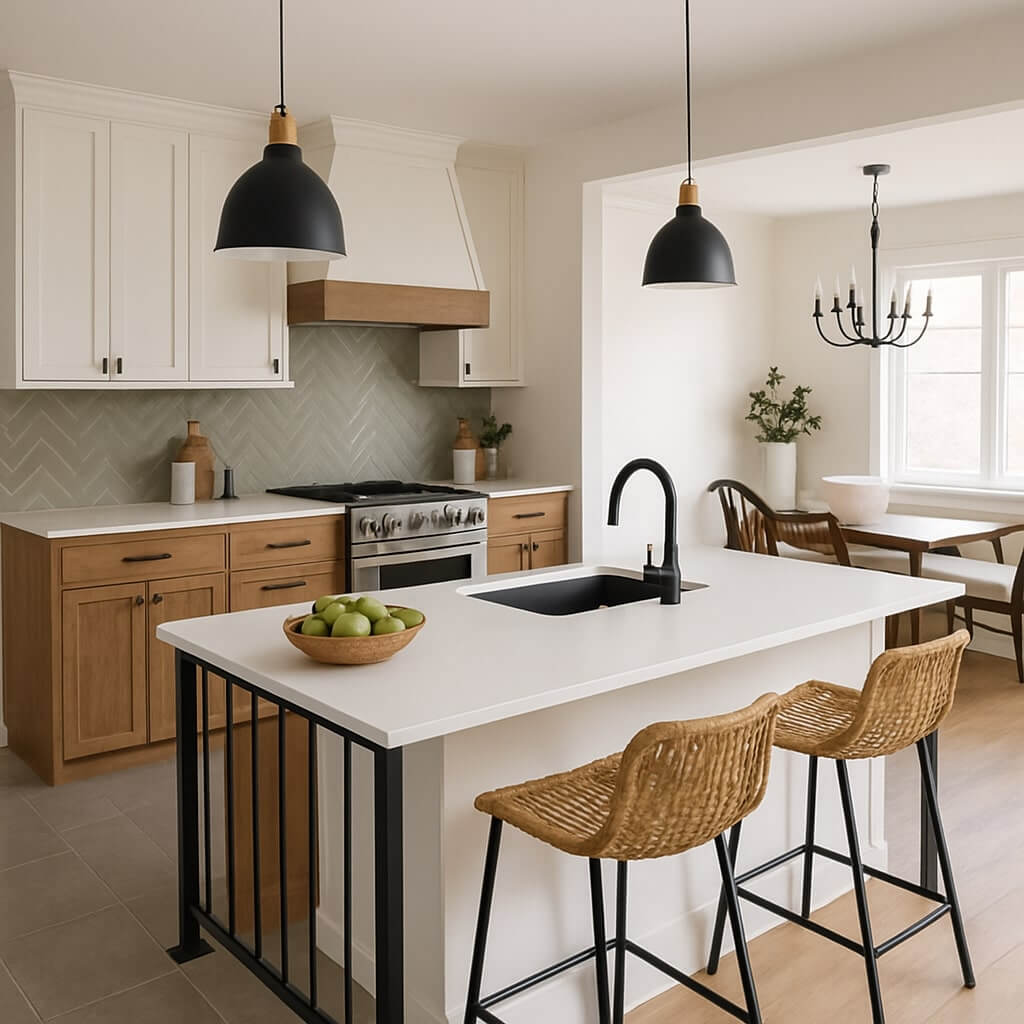
Next, consider your style preferences. Are you drawn to a modern aesthetic, or do you prefer a cozy farmhouse vibe?
Consider your style preferences: do you lean towards a sleek modern look or a warm, inviting farmhouse feel?
By aligning your layout with your style, you’ll create a functional and visually appealing kitchen.
Take the time to envision the overall look and feel—this’ll ensure your remodel meets your practical needs and personal tastes.
Gathering Necessary Tools and Materials
Gathering the right tools and materials is essential for a successful kitchen remodel. Start by focusing on essential measuring tools like tape measures and levels to guarantee accuracy. Don’t forget about safety equipment such as goggles and gloves to protect yourself during the project. Here’s a quick list of what you’ll need:
| Tool/Material | Purpose |
|---|---|
| Tape Measure | For precise measurements |
| Level | To guarantee surfaces are even |
| Safety Goggles | Eye protection during work |
| Work Gloves | Hand protection from injuries |
With these items on hand, you’ll be ready to tackle your remodel confidently!
Creating a Detailed Itemized List
To keep your kitchen remodel on track, it’s vital to create a detailed itemized list.
Start by noting essential materials, breaking down labor costs, and establishing a timeline for completion.
This organized approach not only helps you stay within budget but also guarantees you’re fully prepared for each step of the project.
Essential Materials Needed
A well-organized kitchen remodel starts with a thorough list of essential materials. You’ll need to evaluate various kitchen finishes and fixture options to guarantee your design vision comes to life. Here’s a simple table to help you categorize what you’ll require:
| Category | Items | Notes |
|---|---|---|
| Kitchen Finishes | Cabinets, Countertops | Choose durable materials |
| Fixture Options | Sinks, Faucets | Select styles that match |
| Flooring | Tiles, Hardwood | Reflect on maintenance and durability |
Labor Costs Breakdown
When planning your kitchen remodel, understanding labor costs is essential for staying within budget.
Start by creating a detailed itemized list of labor types you’ll need, such as electricians, plumbers, and carpenters. Consider the complexity of your project locations, as this can influence rates. For example, urban areas may have higher labor costs compared to rural settings.
Don’t forget to include any additional fees for permits or inspections, as these can add to your overall expenses. By breaking down labor costs, you’ll have a clearer picture of your budget and what to expect during your remodeling journey.
Timeline for Completion
While you might be enthusiastic to see your new kitchen come to life, establishing a realistic timeline for completion is essential to avoid delays and frustrations.
Create a detailed itemized list of project milestones and set completion deadlines to guide your progress. Consider these key points:
- Visualize the end goal: Keeping the final outcome in mind helps maintain motivation.
- Stay organized: An itemized list can prevent chaos and confusion during the remodel.
- Celebrate small wins: Acknowledge each completed milestone to stay positive and focused.
With a structured timeline, you’ll make your kitchen dream a reality smoother and more enjoyable.
Estimating Material Costs
To get a good grasp on your kitchen remodel budget, start by calculating the quantities of materials you’ll need.
Then, research prices to guarantee you’re getting the best deals possible. This way, you can avoid surprises and keep your project on track financially.
Calculate Material Quantities
Calculating material quantities is essential for accurately estimating your kitchen remodel costs, as even small miscalculations can lead to unexpected expenses.
To get it right, you’ll want to assess different material types and create quantity estimates.
Pay attention to:
- The size of your kitchen and layout
- The specific materials you plan to use
- Any waste factors for cutting or miscalculations
Research Material Prices
Before diving into your kitchen remodel, it’s crucial to research material prices to guarantee your budget aligns with your vision.
Start with online price comparisons to get a sense of costs for cabinets, countertops, and flooring. Websites like HomeAdvisor or Lowe’s can be valuable resources.
Don’t stop there—conduct local supplier research to find the best deals and understand shipping costs. Visiting stores can also provide insights into quality and availability.
Calculating Labor Expenses
When you’re planning your kitchen remodel, understanding labor expenses is essential, as these costs can greatly impact your overall budget.
Start by researching local labor rates, which can vary based on experience and project scope.
Consider these emotional factors when calculating:
- The quality of workmanship you desire
- Potential delays affecting your timeline
- The stress of managing multiple contractors
Accounting for Unexpected Costs
Even with a solid grasp on labor expenses, unexpected costs can still creep into your kitchen remodel budget.
To safeguard against these surprises, incorporate contingency planning into your estimate. Aim for a budget buffer of at least 10-15% of your total costs.
This way, if you encounter issues like plumbing surprises or material price hikes, you’ll have funds set aside to cover them without derailing your project.
Keep in mind that flexibility is key; adjust your plans as needed and don’t be afraid to tap into that buffer.
Being prepared will help you stay on track and complete your remodel with confidence.
Finalizing Your DIY Kitchen Remodel Estimate
As you near the completion of your kitchen remodel planning, finalizing your estimate is essential to confirm you stay within budget and meet your project goals.
Take a moment to review your costs and make any necessary budget adjustments. Consider these final touches:
- Verify all materials are accounted for, preventing surprises.
- Double-check labor costs and timelines for accuracy.
- Factor in potential additional expenses for a realistic view.
With a clear estimate, you’ll feel confident moving forward, knowing you’ve set yourself up for success.
This process not only saves money but also helps you achieve your dream kitchen efficiently.
Conclusion
To sum up, by following this DIY kitchen remodel estimate template, you’ll set yourself up for success. You’ve assessed your needs, gathered essential materials, and created a detailed cost breakdown. Remember to budget for unexpected expenses to avoid surprises along the way. With careful planning and organization, you can transform your kitchen into the space you’ve always wanted, all while staying within your budget. Now, roll up your sleeves and get started on your exciting remodel journey!