
When you’re remodeling an open-concept split-level kitchen, it’s easy to overlook key design elements. A few missteps can disrupt both the flow and feel of the space. You might think you’re making stylish choices, but neglecting the kitchen workflow or lighting can lead to frustration. Plus, mixing materials without a plan can create chaos. So, what should you keep in mind to avoid these pitfalls? Let’s break it down.
Key Takeaways
- Neglecting the kitchen workflow can lead to inefficiencies; maintain a functional layout with the sink, stove, and refrigerator close together.
- Overlooking lighting considerations diminishes functionality; ensure adequate task lighting and a balanced ambient atmosphere for a welcoming environment.
- Choosing incompatible materials can disrupt visual harmony; balance hard surfaces with softer elements and use complementary colors for unity.
- Ignoring storage solutions results in clutter; incorporate creative storage options like pull-out shelves and ceiling-high units to enhance organization.
- Failing to define spaces can create confusion; use islands, rugs, and lighting variations to clearly delineate cooking and dining areas.
Neglecting the Kitchen Workflow
When you’re planning a kitchen remodel, it’s easy to get caught up in aesthetics and forget about the workflow that makes cooking enjoyable.
A well-thought-out kitchen layout is essential for efficiency. Consider the classic work triangle: the sink, stove, and refrigerator should be close enough to streamline your cooking process.
Pay attention to appliance placement; having your microwave and toaster near the prep area can save you steps.
If you cram too much into your design, you might end up with a cramped space that disrupts your flow.
Prioritizing functionality will guarantee your kitchen is as enjoyable as it’s beautiful.
Overlooking Lighting Considerations
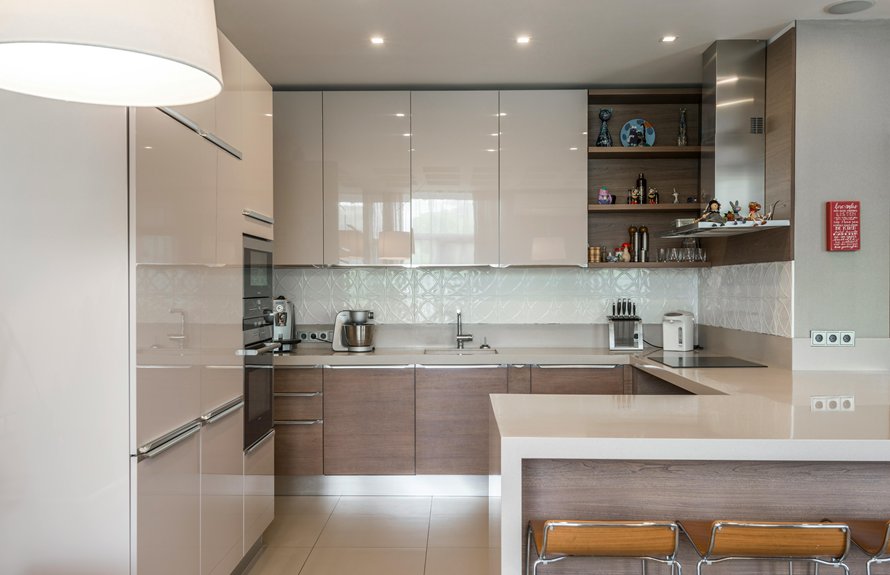
While you might focus on cabinetry and countertops during your kitchen remodel, neglecting lighting can seriously undermine your efforts. Proper lighting enhances both functionality and ambiance.
Incorporate task lighting above key areas like the island and countertops to guarantee you have adequate visibility for meal prep. Pendant lights or under-cabinet fixtures work wonders here.
Don’t forget ambient lighting, too; it sets the overall mood of the space. Consider dimmable options to adjust the atmosphere for different occasions.
Balancing task and ambient lighting creates a welcoming, efficient kitchen that you’ll love spending time in—so don’t skimp on this essential aspect!
Choosing Incompatible Materials
Lighting can set the stage for your kitchen, but the materials you choose will define its lasting beauty and functionality. To achieve material harmony and cohesive aesthetics, avoid mixing incompatible materials that clash visually or structurally.
Consider these tips:
- Balance hard surfaces like granite with softer elements like wood
- Use complementary colors across materials for unity
- Incorporate textures that enhance rather than compete
- Match finishes, like matte and gloss, for a polished look
- Choose durable materials that withstand kitchen use
Choosing the right materials not only elevates your design but also guarantees your kitchen stands the test of time.
Ignoring Storage Solutions
Neglecting storage solutions in your kitchen remodel can lead to chaos and frustration, even if your design looks stunning.
Without sufficient cabinetry, you’ll find your countertops cluttered with appliances and utensils, making cooking a hassle.
Think creatively about storage—consider pull-out shelves, corner cabinets, or ceiling-high units to maximize space.
Don’t forget about utilizing vertical space with wall-mounted racks or shelves.
A well-planned storage strategy not only keeps your kitchen organized but also enhances its functionality.
Failing to Define Spaces
When you overlook the importance of defining spaces in your kitchen remodel, you risk creating an environment that feels cluttered and disorganized.
Effective space delineation guarantees each area serves its purpose while maintaining flow.
Effective space delineation ensures that each area in your kitchen has its own purpose while promoting a seamless flow throughout the space.
Consider these strategies:
- Use island seating as a visual barrier
- Incorporate area rugs to define zones
- Install open shelving to separate cooking and dining spaces
- Utilize lighting variations to highlight different functions
- Choose color palettes to create distinct atmospheres
Conclusion
In your open-concept split-level kitchen remodel, keeping these common mistakes at bay will transform your space into a functional haven. Prioritize workflow, embrace thoughtful lighting, select harmonious materials, guarantee ample storage, and clearly define zones. By doing so, you’ll create a beautiful and efficient kitchen that feels cohesive and inviting. So roll up your sleeves and design with intention—your dream kitchen awaits!